Don’t Touch: Wait, Watch, Call!
For most people, helping wildlife in distress is a natural reaction. Indeed, if you see an animal that appears sick, injured, or orphaned, intervention may be necessary.
Found an animal in distress?
Before attempting a rescue, please call the MARS helpline at (250) 337-2021.
MARS wildlife rehabilitators will assess the situation and determine the best course of action. Our qualified staff and volunteers tend to 600 wildlife emergencies each year so they are very experienced and happy to help you.
Capturing and Containing Wildlife
If a rescue is necessary, injured wild birds can be rounded up and captured using a towel, blanket, or piece of clothing. Place the towel over the bird, covering their head, and gently scoop them up.
Mammals and birds of prey, such as owls and eagles, can be very dangerous to handle without prior training and experience, so please call MARS before you put the animal or yourself at risk.
If you have captured an animal, handle them as little as possible. Even if they appear calm, cuddling and human contact is extremely stressful to wildlife and may even kill them. Put the animal in a cardboard box or other container with air holes and keep them in a warm, dark, quiet place, away from children and pets. Never give wildlife food or water unless instructed by a wildlife rehabilitator.
The MARS Wildlife Hospital is open 7 days a week. It is tremendously helpful if you can transport the animal to us, but if that isn’t possible please call to arrange for a volunteer to pick it up. The less time it takes for the animal to get here, the better its chances of successful rehabilitation! Remember it is illegal to keep wildlife in your possession for more than 24 hours.

If you’ve found a…
Select the type of animal below for specific guidance.
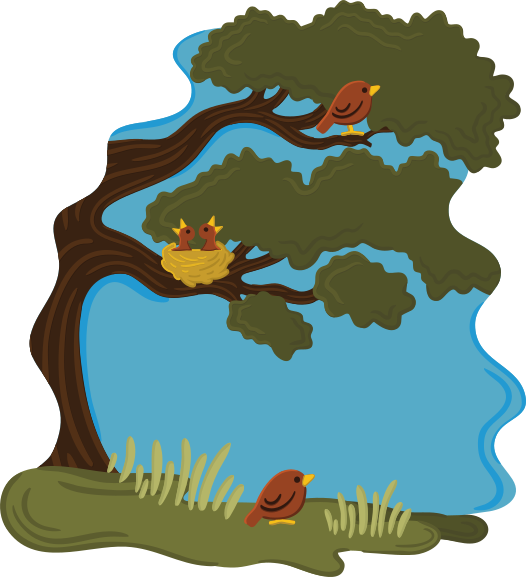
Baby Bird
Many young birds found during the spring and summer months are in the process of “fledging" or leaving the nest. It’s normal for them to be on the ground for several days before they learn how to fly. Usually the fledgling’s parents are nearby and will return periodically to feed and protect their young.
The best mother for a baby bird is its own mother, so before you intervene:
- Observe the bird from a distance
- Keep curious children and pets away
- Watch and listen for the parents
- Determine if the baby is a nestling, fledgling, or brancher
- Look for signs of injury, such as blood or a drooping wing
- Look for signs of illness, such as crusty eyes or beak
- Look for signs that the bird is orphaned, such as fly eggs on the feathers
- Phone MARS to speak to a wildlife rehabilitator
Is it a Nestling, Fledgling, or Brancher?
Nestlings are baby birds that have recently hatched and are not yet ready to leave the nest. They are blind and naked or covered with short pinfeathers and some fluff. If you find a healthy nestling on the ground, try to locate the nest nearby and put the nestling back — it is a myth that bird parents will abandon their babies if a human has handled them. Watch from a distance to make sure the parents return within 2 hours.
- Blind and naked, or have short pinfeathers and some fluff
- Unable to stand up, hop, or perch
- Rely on parents for food and warmth
- Being on the ground is abnormal – must be in the nest
Fledglings are baby birds that have developed enough to leave the nest but cannot yet fly. They are almost fully feathered, but the tail and wing feathers are too short for flight. Being on the ground is a natural event — this is an important stage in their development, during which the parents teach them how to find food and recognize predators. Watch from a distance to make sure the parents return within 2 hours.
- Almost fully feathered, but tail and wings too short for flight
- Able to stand up, hop, learning to perch
- More independent than nestlings, but still rely on parents for food
- Being on the ground is normal – learning to fly
Brancher is another term for a fledgling. Owl and other raptor fledglings are often called branchers because rather than jumping to the ground after leaving the nest, they will perch on a branch nearby. Like fledglings, they are still unable to fly and can be mistaken for a bird in distress.
- Fledglings that perch on or near the nest, rather than hopping on the ground
- Still learning to fly
- Often owl/raptor species
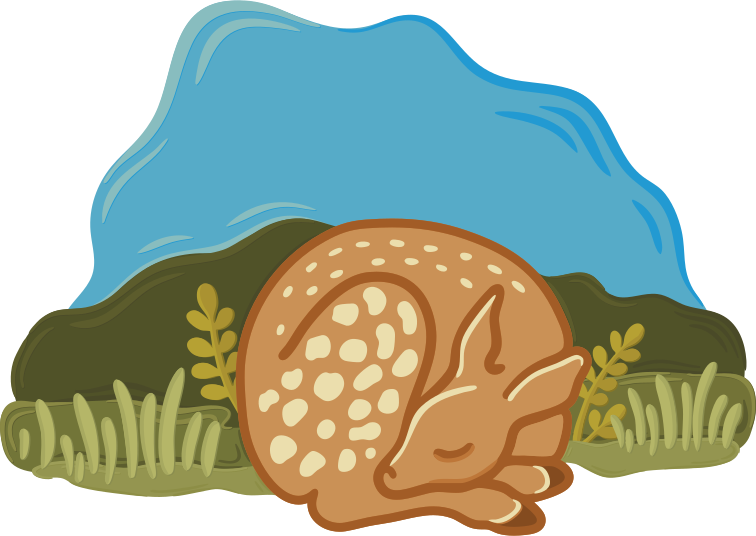
Fawn
Do not assume that a lone fawn is abandoned. When the mother deer is off foraging for food, she often leaves her young behind, sometimes for several hours. The fawn knows to stay still and quiet and does not have a scent so is difficult for predators to locate by smell. Please never touch a fawn with your bare hands — this transfers your scent and makes it easy for predators to find.
The best mother for a fawn is its own mother, so before you intervene:
- Observe the fawn from a distance
- Keep curious children and pets away
- Watch and listen for the mom
- Look for signs of injury, such as blood or broken bones
- Look for signs of illness, such as discharge from the eyes or nares
- Look for signs that the fawn is orphaned, such as soiled fur or fleas
- Phone MARS to speak to a wildlife rehabilitator
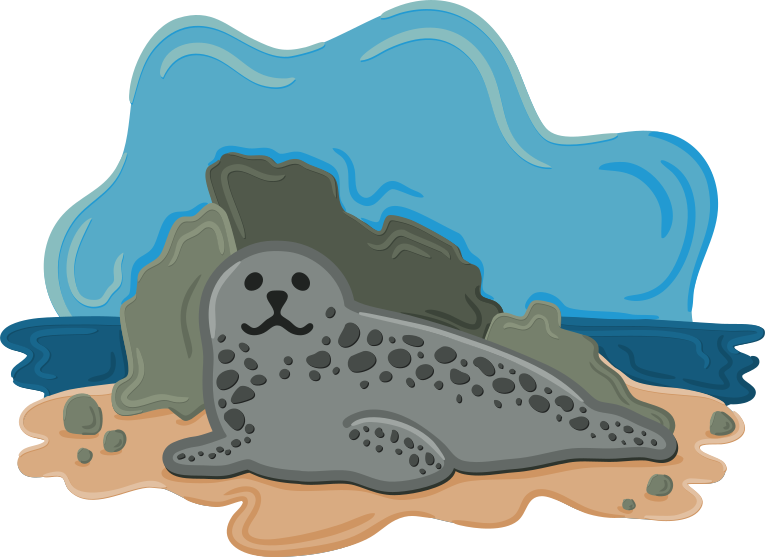
Seal Pup
Do not assume a lone seal pup is abandoned. Pups are often left alone on or near the beach while their mother hunts. Pups can bite so please do not attempt to touch them! Your presence may also frighten the adult seals and cause them to abandon their young.
The best mother for a seal pup is its own mother, so before you intervene:
- Observe the pup from a distance
- Keep curious children and pets away
- Watch and listen for the mom
- Look for signs of injury, such as blood or broken bones
- Look for signs of illness, such as laboured breathing
- Look for signs that the pup is orphaned, such as a thin body or constant vocalizations
- Phone MARS to speak to a wildlife rehabilitator
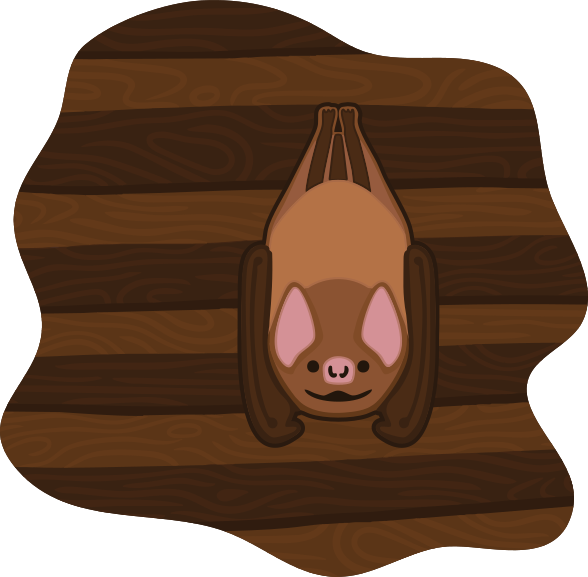
Bat
Do not assume that all bats carry rabies. While bats are a rabies vector species, the CDC has determined that only 0.5% of the entire bat population of BC is a carrier of the virus. Bats are nocturnal and will often find odd places to roost during the day or over winter during hibernation — on sides of buildings, inside patio umbrellas, or even inside wood piles.
- DO NOT TOUCH!
- Keep children and pets away from the bat at all times
- Watch for signs of injury such as broken bones or tears in the wing membrane
- If the injured bat is on the ground, place a container or box overtop of the bat to prevent it from leaving the area
- Phone MARS to speak to a wildlife rehabilitator