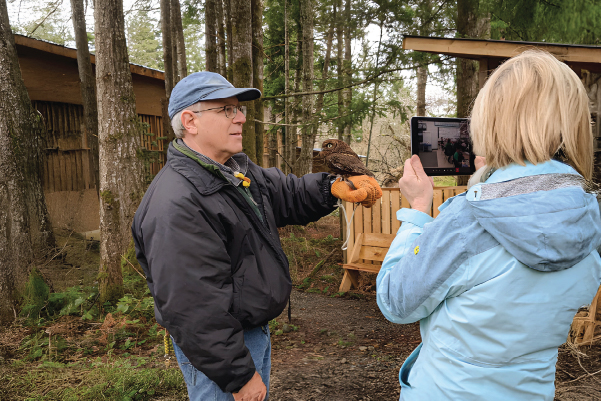
A Visit from an Ambassador Bird
If you’re an educator, community outreach group, or organization putting on an event and you would like to have MARS ambassador birds attend, please fill out the short form on our Contact Us page.
Part of the MARS mission is to spread the word about the protection and preservation of wildlife and habitats on northern Vancouver Island. We love it when the public — particularly young people — can experience our majestic hawk and owls up close, with the interpretative support of our bird handlers.
Our goal is always to release sick or injured animals into the wild after they have recovered, but that isn’t always possible. For various reasons, our Ambassadors are permanent residents of MARS. They travel to classrooms and the wider community with a volunteer bird handler to act as “spokesbirds" for all wildlife.
Planning for an Ambassador Bird Visit
Seeing an owl or hawk up close can be an exciting experience. A bit of preparation will make the encounter enjoyable for audiences while remaining safe and comfortable for the bird.
- Fairly quiet without a lot of echo
- A place where the handler & birds can have their backs to a wall
- Can be outside against trees or under shade
- A flat, stable surface for the bird’s kennel — a table is better than the ground
- Calm bodies, calm voices, hands as still as possible
- Remind the audience that these are wild birds, not pets, and they will not be able to touch them
- Sometimes birds poop — this can be a surprise! Handlers will have pads to catch the cloacal fluid
- Sometimes birds “bate" or fly off the glove — because the bird is attached to the handler by leather straps, this is more flapping than flying and doesn’t hurt the bird
Our Ambassadors
Our non-releasable Ambassador Birds are living out their natural lives comfortably — with room service — in safe and private enclosures at MARS Wildlife Rescue Centre.
Some of the raptors who have become Ambassadors suffered devastating injuries that prevented them from being returned to the wild, while others have become habituated to humans for various reasons. All have found new purpose helping to educate the public about wild nature.
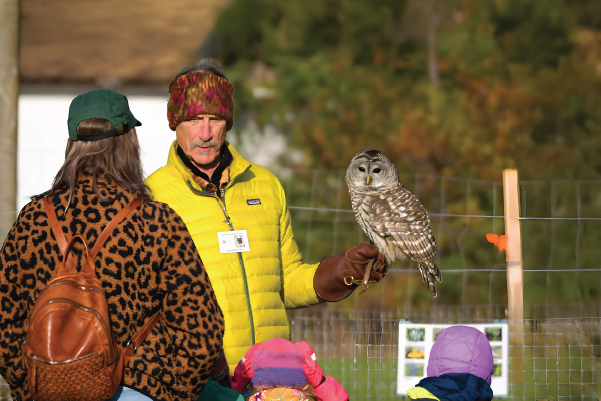
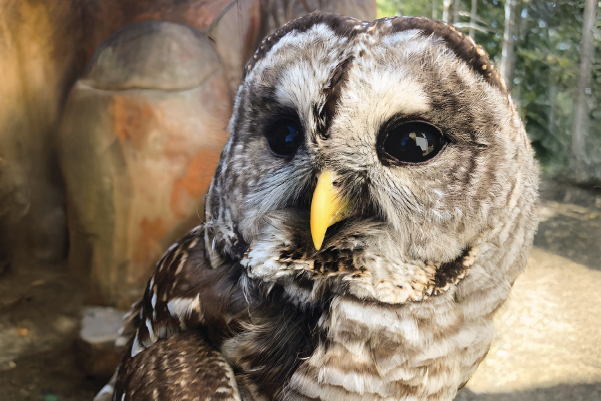
Barred Owl
Marlowe
Marlowe came to MARS in the fall of 2019 after hitting a window in Comox in the middle of the night. He showed many signs of severe head trauma and no threat avoidance. He struggled to eat for the first several months, progressing from being force-fed, to handfed, to eventually eating on his own.
Marlowe has progressed a great deal since arriving, but nowhere near enough to be successfully released into the wild. He gets his name from Christopher Marlowe — William Shakespeare’s friend, collaborator, and rival. Born spring 2019, expected lifespan upwards of 20 years. Weighs 600–700 g and eats two mice a day.
Barred Owl Cool Facts
- Lives in forests; most active at night
- Nests in abandoned cavities in trees; one brood per year
- Is hunted by the Great Horned Owl
- Hoots “Who Cooks for You?" twice
- Doesn’t migrate; has acute sight and hearing
- Rips prey apart and eats the head first
Western Screech Owl
Lanei
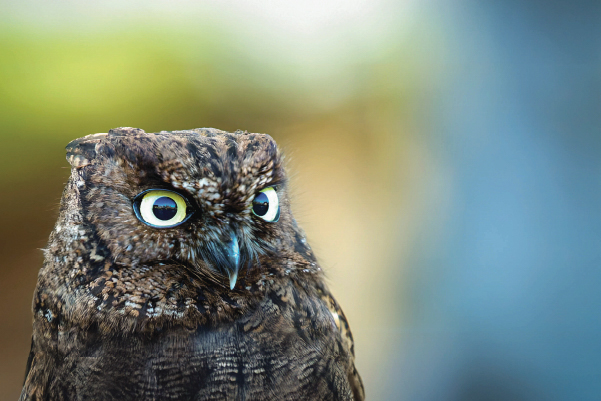
Lanei arrived at MARS in March 2015 from a research and captive breeding program for Western Screech Owls in Northern BC when he was about 2 years old. These birds are threatened and protected under the federal Species at Risk Act. Lanei is non-releasable due to his inability to hunt or protect himself from predators.
Lanei can be resistant to go to “work" and will hang upside down from the roof of his enclosure — but once his plans are foiled, he becomes very calm and enjoys having his picture taken. He eats one mouse each day and weighs 175–250 g.
Western Screech Owl Cool Facts
- Makes a series of hollow toots
- Can take prey bigger than its own body
- Diet includes bats, insects, and earthworms
- Invisible when pressing against a tree
- Nests in woodpecker tree cavities
- Male and female often preen each other
- Vulnerable to predation from Barred Owls
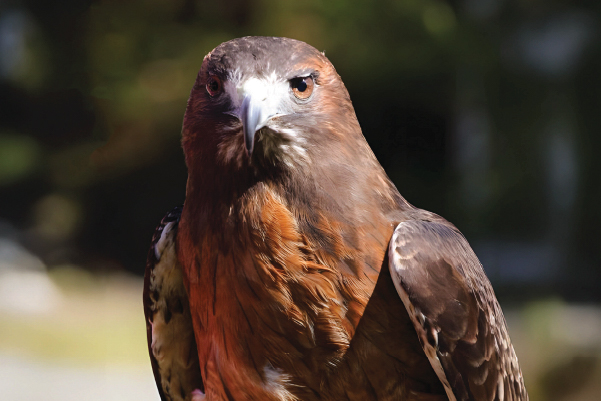
Red-Tailed Hawk
Horus
Horus is a Red-tailed Hawk named after the falcon-headed Egyptian god of the same name. She was found in 2008 hanging around the Quinsam River Hatchery near Campbell River, begging for food. When approached by one of our bird handlers, she jumped to the glove — indicating she was imprinted to humans and probably raised in captivity.
When brought to MARS she was emaciated and suffered from bumblefoot, an infection which prevented her from bending her toes to perch or catch prey. MARS developed a cream to cure her foot issue. She is at least 14 years old with a life expectancy of 20 years, eats half a quail each day, and weighs about 1.3 kg.
Red-Tailed Hawk Cool Facts
- Likes open country and fields; perches on utility poles to spot prey
- Is the most common hawk in Canada
- Is easy to train; popular with falconers
- Mates after soaring in high circles; mates for life
- Has great eyesight, built to hunt; has a loud, piercing scream
Bald Eagle
Humpty
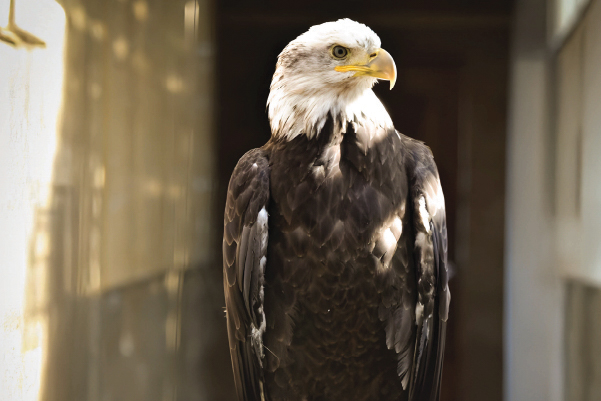
Humpty was a pre-fledgling found at the base of a tree and thought to be dead. Five days later he was found to be moving and MARS was called in for rescue. As he had suffered a great fall, his finders named him Humpty.
Upon admission he was found to be suffering from severe dehydration and emaciation. His tail feathers were missing but slowly grew back within his first year at MARS. It is believed he has some mental deficit due to his early injuries. His diet consists of poultry, fish and deer meat; he weighs about 3–3.5 kg.
Bald Eagle Cool Facts
- Not really bald — white-feathered heads gleam above their brown body
- Young birds attain adult plumage in about five years
- Scavenge many meals by harassing other birds or eating carrion
- Eat mainly fish, but also hunt mammals, gulls, and waterfowl
- Known to play and pass sticks to each other in midair
- The oldest recorded wild bird was at least 38 years old
Bald Eagle
Hyacinth
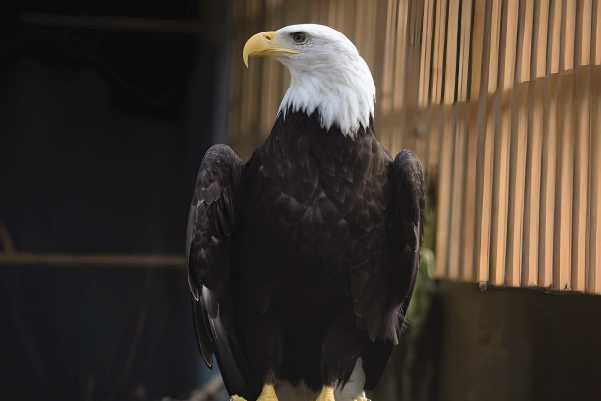
Hyacinth fell from her nest as a pre-fledgling when her nest fell apart. MARS was called and went by boat to the site at Hyacinth Cove on Quadra Island to rescue her.
She suffered multiple fractures in her right wing too close to the shoulder to be pinned, so her wing was taped for 4 weeks. When another eagle accidentally bumped into her later, the wing was re-fractured. It eventually healed but has a slight curve in the humerus, so she is unable to “soar like an eagle".
Hy is very vocal and likes to greet her handlers. She is fairly gentle in spite of her size and gets along well with Humpty, her permanent roommate. Her diet consists of poultry, fish and deer meat; she weighs about 3.5–4.0 kg.
Albino American Crows
Nimpkish & Kokish
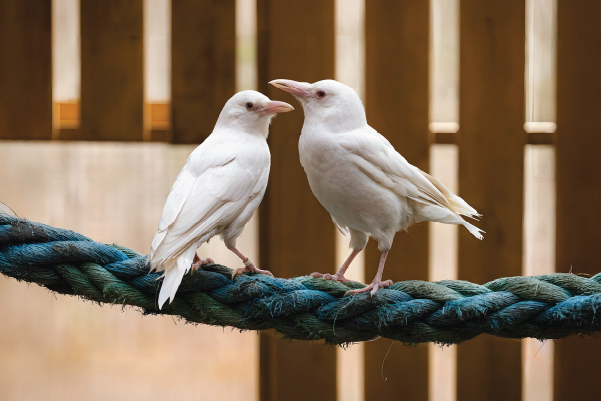
Siblings Nimpkish and Kokish arrived as juvenile birds in the summer of 2020, being aggressively mobbed by other crows. Kokish (female) had a greenstick fracture of the tibiotarsus. These distinctive birds are albinos — they do not possess the pigments that would make their feathers, skin, beak, and eyes black.
This genetic condition results in very weak eyesight, extreme sensitivity to light, and poor depth perception, making it difficult for them to find food and protect themselves. A veterinarian determined the pair would have the best quality of life as Ambassadors at MARS.
Their names reflect their origin: born in the traditional territory of the ‘Namgis First Nation on northern Vancouver Island, which encompasses the Nimpkish and Kokish watersheds. Note: when temperatures fall below -10°C, these birds are moved into the hospital and aren’t available for viewing.
American Crow Cool Facts
- Young crows will help their parents raise the next generation
- Form families of up to 15 individuals
- Prefer to nest in top branches of evergreens
- Are corvids — same family as the Stellar Jay, Canada Jay, and Common Raven
- Like all corvids, are extremely intelligent; have been observed making and using tools
- Omnivores: eat grains, nuts, berries, insects, eggs, fish, carrion, and garbage
In Memoriam
Flying free but never forgotten.
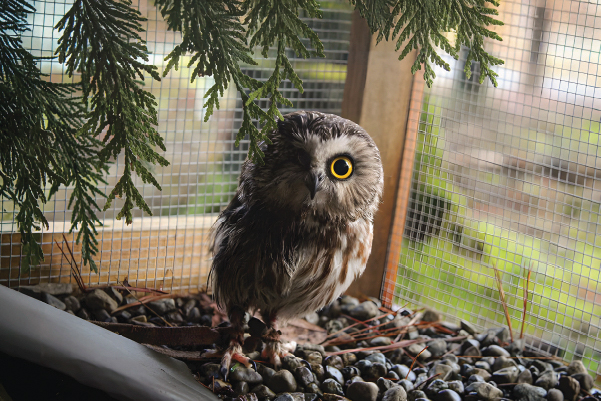
Northern Saw-Whet Owl
Sawyer (2014–2021)
Sawyer had been with MARS since August 2014 after sustaining severe wing damage from a cat attack — the entire wing was surgically amputated. In 2017 he also underwent surgical removal of one eye. Our little one-winged, one-eyed owl was among our fiercest birds. His small size and oversized personality made a lasting impression on all our visitors. He passed peacefully at MARS in late January 2021, surrounded by those who loved him.
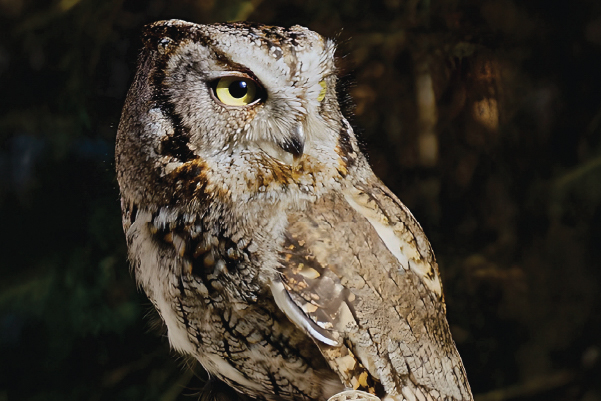
Western Screech Owl
Otus Jr (2014–2021)
Otus Jr. was the offspring of one of our previous ambassador owls who had participated in a captive breeding program for the threatened Western Screech Owl. He joined the MARS family in 2014 and became a mainstay of our education program. He was always content to get out and sit on the glove of a handler. He had a huge impact on all of us at MARS and many fans in the community. He passed away at MARS in early February 2021, surrounded by those who loved and cared for him.
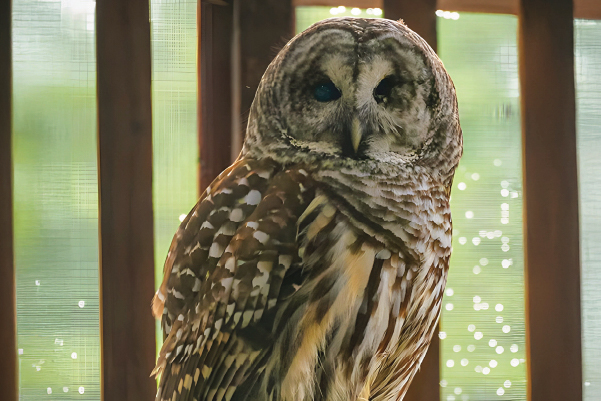
Barred Owl
Shakespeare (2005–2023)
Shakespeare was hit by a car in 2003, losing his left eye and fracturing his beak and sternum. He began Ambassador training in 2006 and made his first public appearance six months later. Over 17 years at MARS, Shakey touched the lives of thousands of people and bonded strongly with several of his handlers. Shakespeare developed liver disease and lung issues towards the end of his life and was humanely euthanized in March 2023. He passed in the arms of his favourite handler. Fly high and free once again!
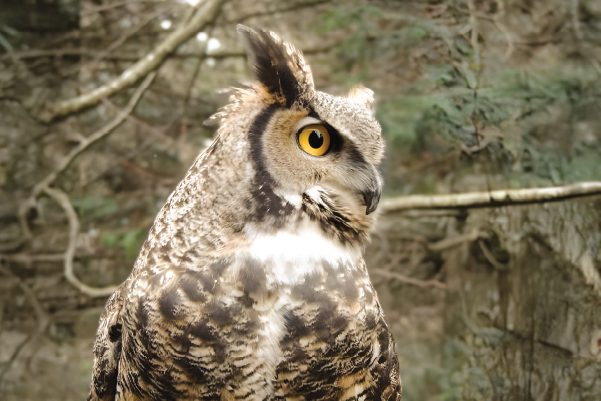
Great Horned Owl
Brinley (2004–2023)
Brinley was hit by a car in 2005, requiring partial amputation of her right wing. As one of our caregivers said: “Brinley was a force to be reckoned with. She lost the ability to be the apex predator of the night sky but never lost the attitude." She touched many lives while attending events and presentations. We at MARS have had the absolute pleasure of working with Brinley — may she enjoy her final freedom in the skies.